
What Is the Difference Between Engraving, Etching, and Printing?

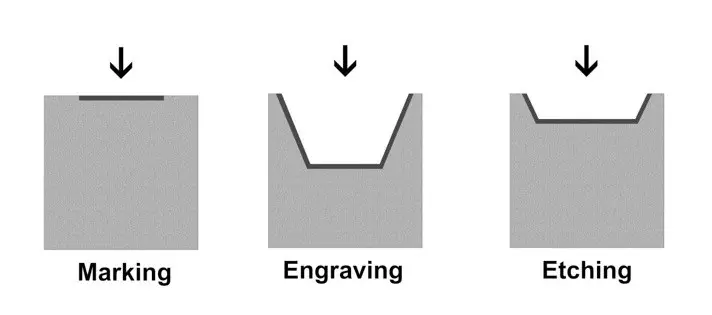
If you have ever ordered a custom ring, a branded tool, or a metal name plate, you have probably seen these three words: engraving, etching, and printing. They are often used as if they mean the same thing. They do not.
Each method puts a mark on a surface, but each one works differently, looks different, lasts for different lengths of time, and costs different amounts. Picking the wrong one can leave you with a mark that fades, wears off, or does not suit your product.
In this guide, you will learn the difference between engraving, etching, and printing, how each process works, where each one shines, and how to choose the right one for your project. We will keep everything simple, with examples from jewelry, tools, and everyday products.
A quick note: in this article, “printing” means putting ink or coating onto a surface, as in inkjet, pad, screen, or UV printing. It does not mean 3D printing.
The Short Answer
Here is the simplest way to remember the difference:
- Engraving removes material to cut a mark into the surface.
- Etching changes or lightly removes the top layer of the surface, using chemicals or heat.
- Printing adds ink or coating on top of the surface.
That one idea, cut in, change the surface, or add on top, explains almost everything else.
What Is Engraving?
Engraving is the process of cutting a design into a material. The tool removes a small amount of the surface, leaving a groove or recess.
Traditionally, engraving was done by hand with sharp tools, and many jewelers still use this skill for fine pieces. Today, it is also done with machines, including rotary engravers and laser engravers.
How Laser Engraving Works
A fiber laser fires very short, powerful pulses of light at a metal surface. Each pulse melts and vaporizes a tiny amount of material. Repeating this over your design creates a recess in the surface.
The mark is physically cut into the material. You can often feel it with a fingernail.
What Engraved Marks Look Like
- A recessed groove or textured area
- Often light gray, frosted, or matte on metal
- Contrast depends partly on light and shadow, so it can look different from different angles
Advantages of Engraving
- Very durable. The mark is part of the material, so it survives wear, handling, and cleaning.
- Permanent. It does not peel, fade, or wash off.
- Tactile. You can feel the mark, which helps with identification and tamper resistance.
- Works on many materials, including metals, some plastics, wood, and glass, depending on the method.
- No consumables. Laser engraving needs no ink or chemicals.
Limitations of Engraving
- Removes material, so thin parts need care.
- Contrast can be lower, especially on shiny metal.
- Deep engraving takes more time.
- Rough surface inside the mark, which can trap dirt on hygiene-sensitive items.
Common Uses
- Wedding rings and personalized jewelry
- Tools and machine parts
- Industrial serial numbers
- Trophies and name plates
- Items that face rough conditions
What Is Etching?
Etching changes the top layer of a surface to create a mark. It does not cut as deeply as engraving. There are two main types.
Chemical Engraving
In traditional etching, a protective layer is applied to the surface, and the design is exposed. Acid or another chemical then eats away the exposed areas to a controlled depth. Electrochemical etching, which uses electricity and a stencil, is another common method for marking metal.
This is widely used for industrial marking, printed circuit boards, and decorative metalwork.
Laser Etching
Laser etching uses a laser to melt the top of the surface slightly. The melted area cools and changes texture or color, which creates contrast. Because only the surface is affected, the mark is shallower and usually smoother than a deep engraving.
You will often hear the term laser etching used in the same breath as laser engraving, and the two overlap a lot in everyday language. The main difference is depth: etching mostly works on the very top layer, while engraving cuts deeper.
What Etched Marks Look Like
- Fine, smooth, and shallow
- Often a different texture or color from the surrounding surface
- Good detail for small text and logos
Advantages of Etching
- Good fine detail. It works well for small, sharp designs.
- Smooth surface. There is little or no groove, so it is easy to clean.
- Fast. Shallow marks take less time than deep engraving.
- Less material removed, so it suits thin or delicate parts.
Limitations of Etching
- Less depth, so the mark can wear down faster than a deep engraving
- Chemical etching needs chemicals, stencils, and careful handling
- Not every material responds the same way
- Results depend heavily on settings and surface condition
Common Uses
- Barcodes and QR codes
- Small logos and text
- Medical and food-related items that need a smooth surface
- Electronics and circuit boards
- Decorative metalwork
If you are interested in smooth, dark marks on stainless steel, read our guide on black marking vs. surface engraving.
What Is Printing?
Printing is a completely different idea. Instead of changing the material, printing adds a layer of ink or coating on top of it.
There are several kinds of printing used to mark products:
- Inkjet printing: tiny drops of ink sprayed onto the surface
- Pad printing: ink transferred from a plate to the product using a soft pad, good for curved items
- Screen printing: ink pushed through a stencil screen
- UV printing: ink that is cured instantly with UV light
- Thermal transfer and labels: printed labels or stickers applied to a surface
What Printed Marks Look Like
- Sit on top of the surface
- Can be any color, including full-color images and photos
- Can be glossy, matte, or textured depending on the ink
Advantages of Printing
- Full color. Printing can reproduce logos, photos, and detailed artwork in many colors.
- High contrast. Colored ink stands out on almost any background.
- Works on many materials, including plastics, paper, glass, and packaging.
- Fast for large volumes. Some methods can print thousands of items quickly.
Limitations of Printing
- Less durable. Ink can scratch, fade, peel, or wear off, especially on items that are handled or cleaned a lot.
- Needs consumables. Inks, cartridges, and screens must be replaced.
- Surface preparation matters. Ink may not stick to oily, smooth, or untreated surfaces.
- Not ideal for traceability marks that must last the entire life of the product.
Common Uses
- Product packaging and labels
- Promotional items
- Plastic housings and buttons
- Full-color branding
- Short-life information, like batch dates
Engraving vs Etching vs Printing: Side-by-Side
| Feature | Engraving | Etching | Printing |
|---|---|---|---|
| How it works | Removes material, cuts a groove | Changes or lightly removes the top layer | Adds ink or coating on top |
| Depth | Deepest | Shallow | None (sits on top) |
| Feel | Can be felt | Mostly smooth | Smooth or slightly raised |
| Durability | Very high | High, but shallower | Lower |
| Color | Mostly shades of gray or the metal’s tone | Shades of gray, dark, or light | Any color |
| Fine detail | Good | Excellent | Very good |
| Consumables | None for laser | Chemicals for chemical etching, none for laser | Ink and supplies |
| Best for | Wear, permanence, tactile marks | Fine detail, smooth surfaces, codes | Color, packaging, short-life marks |
These are general comparisons. Results always depend on the material, equipment, and settings.
How the Methods Compare on Different Materials
Not every method suits every material.
- Metals (stainless steel, brass, gold, silver, aluminum): Laser engraving and laser etching work very well. Chemical etching is also common. Printing is possible, but ink may wear.
- Plastics: Laser marking works on many plastics, with results depending on the type. Printing is very common on plastic.
- Glass: Engraving and etching work well, using lasers or abrasive methods. Printing is also used.
- Wood and leather: Laser engraving is popular. Printing is possible with the right inks.
- Paper and packaging: Printing is the main choice.
If you are marking jewelry specifically, our guide on how to prepare jewelry for fiber laser marking covers cleaning, fixturing, and choosing a good marking area.
Which Model Should You Choose?
Ask yourself a few simple questions.
1. How Long Must the Mark Last?
- For the life of the product: engraving or laser etching
- For a short time or one use: printing is fine
2. Do You Need Color?
- Full color or photos: printing
- Single-color or monochrome marks: engraving or etching
3. How Rough Will the Environment Be?
- Heavy wear, heat, chemicals, or weather: engraving
- Normal handling: etching works well
- Light use or indoor display: printing may be enough
4. Does the Surface Need to Stay Smooth?
- Yes (medical, food, skin contact): shallow laser etching or annealing
- No: engraving is fine
5. How Small Is the Detail?
- Very small text and codes: laser etching or fine engraving. See our guide on how to mark tiny text without losing readability.
- Large simple marks: any method works
6. How Many Pieces Do You Need to Mark?
- Small to medium runs and custom items: laser marking, since it needs no setup plates or screens
- Very large runs of identical colored items: printing can be cheaper per piece
7. Will the Mark Be Scanned?
For QR codes and barcodes, high contrast and permanence matter. Laser marking is often the best choice. Read our guide on how to create permanent QR codes with a fiber laser marker.
Why Fiber Lasers Are So Popular for Engraving and Etching
More workshops are choosing fiber laser markers because one machine can do both engraving and etching, just by changing settings.
- Permanent marks without inks or chemicals
- Very fine detail on small items like jewelry and tags
- Fast and repeatable results
- Low running costs, since there are no consumables
- Digital control, so changing designs is as easy as changing a file
- Works with many metals and some other materials
The type of mark you get depends on your settings. Our guide on how to choose the right marking speed and power for fiber lasers explains how power, speed, and frequency decide whether you get a light etched mark or a deep engraving. The lens matters too, and our guide on how to choose the right fiber laser marking lens covers that.
If you want to explore equipment, take a look at our fiber laser marking machines, field lenses, rotary axes, and fixture tables.
Common Mix-Ups About These Three Methods
Engraving and Etching Are the Same Thing?
They overlap, and many people use the terms loosely. But engraving cuts deeper, while etching works on the top layer. The difference is mostly depth and process.
Printed Marks Are Just as Permanent as Engraved Ones
Not usually. Ink sits on top of the surface and can wear away. Engraved and etched marks are part of the material.
Laser Marking Is Printing With a Laser
Not quite. A laser does not add ink. It changes or removes the material, so it is closer to etching and engraving than to printing.
Deeper Is Always Better
Not always. A very deep mark can weaken thin parts, trap dirt, and take much longer. Choose the depth that suits your use.
Quick Decision Checklist
Choose engraving if:
- The mark must survive heavy wear
- You want a deep, tactile mark
- Permanence matters most
Choose etching if:
- You need fine detail and a smooth surface
- The part is thin or delicate
- You are marking codes or small text
Choose printing if:
- You need full color or photos
- The mark is short-lived or decorative
- You are marking packaging or plastics in large volumes
Always:
- Test on a sample of your real material
- Check how the mark looks under the lighting where it will be seen
- Think about how the product will be used and cleaned
FAQ
What is the main difference between engraving and etching?
Engraving cuts deeper by removing material, while etching changes or removes only the top layer of the surface.
Is laser etching the same as laser engraving?
They are closely related and the terms overlap. Laser etching usually means a shallower mark that melts the top surface, while laser engraving cuts deeper into the material.
Which lasts longer: engraving, etching, or printing?
Engraving usually lasts the longest, followed by etching. Printing is usually the least durable, because ink sits on top and can wear off.
Is printing better than engraving for color?
Yes. Printing can reproduce full-color designs, while engraving and etching are usually limited to shades of gray, dark, or light.
Can a fiber laser do both engraving and etching?
Yes. By changing power, speed, frequency, and passes, one fiber laser can create light etched marks and deeper engravings.
Which method is best for jewelry?
Laser engraving and laser etching are popular, because they are permanent and can produce very fine detail. Choose the depth based on how thin the piece is and how it will be worn.
Which method is best for QR codes?
Laser etching or annealing is often preferred, because the mark is smooth, permanent, and high in contrast. Test scanning before final production.
Is engraving more expensive than printing?
It depends on the volume. For custom items and small runs, laser marking is often more cost-effective. For huge runs of identical colored items, printing can be cheaper per piece.
Conclusion
Engraving, etching, and printing may look similar at first glance, but each one works in its own way.
Engraving cuts into the material for deep, durable marks. Etching changes the top layer for fine, smooth detail. Printing adds ink for color, but with less durability. The best choice depends on how long the mark must last, how much detail you need, whether you need color, and how the product will be used.
If you are setting up or upgrading your marking workshop, explore our range of fiber laser marking machines, lenses, rotary axes, and fixture tables at MCast 3D. If you are not sure which method or equipment fits your products, contact our team and we will help you choose.