
What Is the Difference Between Water-Washable Resin and Standard Resin?

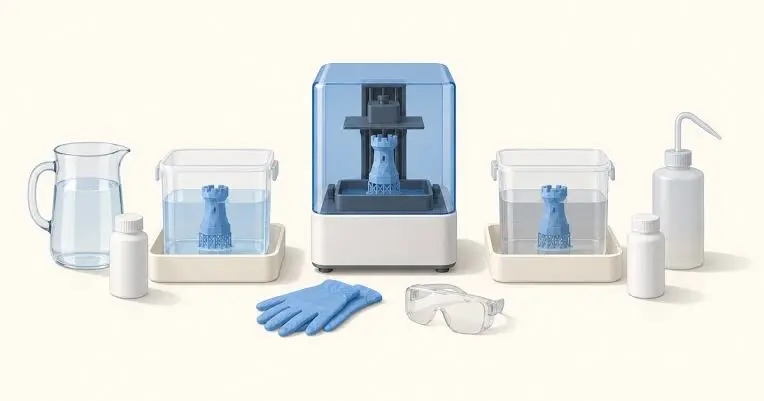
When you buy resin for a 3D printer, you will quickly notice two labels on the bottles: standard resin and water-washable resin. The names suggest that the difference is simply how you clean the prints. That is true, but there is more to the story.
The type of resin you choose affects your cleaning process, your costs, your workspace, the strength and accuracy of your parts, and even how you dispose of waste. Picking the wrong one for your project can lead to sticky prints, weak parts, or extra hassle you did not expect.
In this guide, you will learn the difference between water-washable resin and standard resin, how each one works, the pros and cons, how to wash and cure them correctly, and how to choose the right one for your work, in simple, practical language.
The Short Answer
- Standard resin is washed with a solvent, usually isopropyl alcohol (IPA), to remove uncured resin from the surface of your prints.
- Water-washable resin is formulated so that uncured resin can be rinsed off with water (sometimes with a little soap or cleaner).
Both types are cured with UV light, and both produce solid plastic parts. The big differences are in cleaning, cost, handling, and print properties.
What Is Standard Resin?
Standard resin, sometimes called regular or ABS-like or general-purpose resin, is the original kind of photopolymer resin used in LCD and SLA printers. It does not mix with water. When a print comes off the build plate, it is covered in sticky, uncured liquid resin. To clean it, you need a solvent that can dissolve that sticky layer.
The most common solvent is isopropyl alcohol (IPA). Some people use ethanol or special commercial cleaners instead.
What Standard Resin Is Known For
- Good detail and sharp surfaces
- Well-tested, predictable behavior
- A wide range of types, including tough, flexible, clear, castable, and dental resins
- Generally strong mechanical properties for its category
- Widely used for jewelry, dental work, miniatures, and prototypes
What Is Water-Washable Resin?
Water-washable resin is made with ingredients that allow uncured resin to dissolve or wash away in water. This makes cleanup simpler, since you can rinse prints in a container of clean water instead of using alcohol.
It was designed to solve some of the annoyances of standard resin, such as the cost and smell of IPA, and the need to buy and store flammable liquids.
What Water-Washable Resin Is Known For
- Easier, cheaper cleaning with water
- No need for IPA in most workflows
- Popular for beginners, hobby printing, and miniatures
- Good surface detail for display models
- Less flammable cleaning liquid to store
It is important to understand that “water-washable” does not mean “safe like water.” It is still a chemical resin that can irritate skin and harm the environment, and we will cover that in a moment.
How Does the Chemistry Differ?
You do not need to be a chemist to understand the basic idea.
- Standard resin is mostly made of oily, water-repelling ingredients, which is why it needs a solvent like IPA to dissolve it.
- Water-washable resin includes ingredients that attract water, called hydrophilic ingredients. These let water pick up and carry away the uncured resin from the print’s surface.
Once the resin is cured by UV light, both types become solid plastic. But because of their different ingredients, they can behave differently in terms of strength, moisture absorption, and long-term stability.
Side-by-Side Comparison
| Feature | Standard Resin | Water-Washable Resin |
|---|---|---|
| Cleaning liquid | IPA or another solvent | Water, sometimes with mild soap |
| Cleaning cost | Ongoing cost of IPA | Very low |
| Flammable cleaning liquid | Yes (IPA) | No |
| Wash fumes | IPA smell | Less solvent smell, but resin odor remains |
| Part strength | Generally good to excellent | Often slightly lower, depends on brand |
| Moisture absorption | Low | Can absorb more moisture |
| Accuracy and stability | Generally very good | Good, but depends on brand and drying |
| Surface detail | Very good | Very good |
| Resin types available | Very wide | Growing, but narrower |
| Best for | Precision, engineering, jewelry, dental, castable work | Hobby, miniatures, display models, beginners |
| Drying needed before curing | Yes, brief | Yes, thorough |
| Waste handling | Dirty IPA needs care | Dirty water needs care |
These are general trends. Every brand and formula is different, so always check the data sheet.
Advantages of Water-Washable Resin
1. Cheaper Cleaning
IPA costs money, and you use a lot of it. Water is almost free, which can lower your running costs, especially if you print often.
2. No Flammable Liquid to Store
IPA is flammable and needs careful storage. Water does not. This can be a plus in a small home workspace.
3. Less Solvent Smell
Many people dislike the sharp smell of IPA. With water-washable resin, that smell is reduced. Note that the resin itself still has an odor, so ventilation is still important.
4. Simple Washing Setup
You can wash prints in a basic plastic container or a wash station filled with water. There is less need for special sealed containers.
5. Beginner-Friendly
Because cleanup feels simpler, many beginners start with water-washable resin.
Disadvantages of Water-Washable Resin
1. Possible Loss of Strength
Many water-washable resins have slightly weaker mechanical properties than comparable standard resins. This varies by brand, and some newer formulas have improved a lot, but it is something to check before you print functional parts.
2. Moisture Absorption
Because these resins include water-friendly ingredients, cured parts can absorb moisture from water and humid air. This may lead to:
- Slight swelling or dimensional changes
- Parts that feel softer or slightly sticky if not dried properly
- Weaker parts over time in humid conditions
3. Careful Drying Is Required
Parts must be completely dry before curing. Water trapped on the surface or in tiny crevices can cause cloudy patches, weak surfaces, or sticky spots when cured.
4. Fewer Specialized Types
There are many more standard resins for specialized uses, such as dental, castable, and high-temperature resins. Water-washable options exist in some categories, but the range is narrower.
5. Water Disposal Still Matters
This is the most commonly misunderstood point. Water that has washed uncured resin is contaminated water. It can contain resin that is harmful to skin, wildlife, and water systems. You must not pour it down the drain. We cover safe disposal below.
Advantages of Standard Resin
- Wider choice of materials, including engineering, flexible, high-temperature, castable, and dental resins
- Generally better mechanical performance
- More stable parts that do not absorb much water
- Well suited for precision work where accuracy and repeatability matter
- Established workflows, especially in jewelry and dental labs
If you are working with jewelry casting, for example, standard castable resins are the norm. Our guides on the jewelry casting workflow with 3D printing and post-processing castable resin prints explain why those workflows rely on IPA-washable materials. For dental work, our article on dental model accuracy explains why consistency matters.
Disadvantages of Standard Resin
- Needs IPA or another solvent, which costs money and must be stored safely
- IPA is flammable, so you need good storage and no ignition sources nearby
- Stronger solvent smell during washing
- Dirty IPA needs proper disposal
- Slightly more complex cleaning setup
Despite these points, most professional workshops still prefer standard resin, because the material properties and the range of options are better.
How to Wash and Cure Each Type Correctly
The right washing method makes a big difference to final quality. Always follow the instructions from your resin’s manufacturer first. The steps below are general guidance.
Washing Standard Resin
- Wear nitrile gloves and eye protection.
- Let excess resin drip off the build plate before removing the print.
- Remove the print from the plate carefully.
- Wash in IPA in a sealed container or wash station for the recommended time. Many people use two stages: a first dirty rinse, then a second clean rinse.
- Avoid soaking too long, which can weaken or fog some resins.
- Dry thoroughly, using air or paper towels, and let any remaining IPA evaporate.
- Cure under UV according to the instructions.
Washing Water-Washable Resin
- Wear nitrile gloves and eye protection.
- Let excess resin drip off the build plate.
- Remove the print from the plate carefully.
- Wash in clean water, gently agitating, for the recommended time. Some brands suggest a small amount of mild detergent. Follow the manufacturer’s advice.
- Rinse again in fresh water to remove any remaining residue.
- Dry completely. Use paper towels, air, or a gentle fan. Make sure no water is left in holes, crevices, or detailed areas.
- Cure under UV according to the instructions.
Washing water-washable resin for too long can also affect some parts, so avoid leaving prints in water for extended periods.
Can You Wash Water-Washable Resin in IPA?
In many cases, yes. Many water-washable resins can be cleaned with IPA too, and some people prefer this for faster drying and better cleaning. However, not every brand recommends it, so check the guidance for your resin.
Can You Wash Standard Resin in Water?
No. Standard resin does not dissolve in water. If you wash it only in water, uncured resin will stay on the surface, and the part will be sticky or cloudy after curing.
Do Not Share Wash Containers
Use separate containers for IPA and water washing, and label them clearly. Mixing the two can create a messy, cloudy solution that is harder to clean and dispose of.
Safety: Water-Washable Does Not Mean Harmless
A common myth is that water-washable resin is “eco-friendly” or “safe to pour down the sink.” That is not true.
- Uncured water-washable resin can still irritate skin and eyes.
- It can still cause allergic reactions after repeated contact.
- It still has fumes, so ventilation is still important.
- The wash water contains dissolved uncured resin, which can harm wildlife and water systems.
So you should still:
- Wear nitrile gloves and eye protection.
- Work in a well-ventilated area.
- Keep resin and wash water away from children and pets.
- Store resin in sealed bottles, away from sunlight.
Our guide on resin 3D printing safety covers ventilation, gloves, storage, and waste disposal in detail.
How to Dispose of Wash Water and Used IPA
Both cleaning liquids need careful handling.
Dirty Wash Water
A common method is to cure the resin in the water so it becomes solid, then dispose of the solids.
- Collect the wash water in a clear, UV-safe container.
- Place the container in sunlight or under a UV light so the dissolved resin cures into small solids.
- Filter the water through a coffee filter or similar to catch the cured particles.
- Dispose of the cured solids and filters as solid waste.
- Follow your local rules for disposing of the remaining water. If you are unsure, ask your local waste authority.
Never pour untreated wash water down the drain or onto the ground.
Dirty IPA
- Let the container sit in sunlight or under UV so the resin particles cure and settle.
- Filter the clear liquid and reuse it for the first wash.
- When it is too dirty to reuse, take it to a hazardous waste collection point or follow local rules.
- Dispose of the cured solids as solid waste.
How the Resin Type Affects Print Quality
Washing is only part of the picture. Standard and water-washable resins can behave differently on the printer, too.
- Exposure settings. Different resins need different exposure times. Never assume the same settings will work for both.
- Detail and accuracy. Both can give excellent detail, but check reviews and data sheets for the specific resin.
- Print failures. If prints keep failing, the cause may be exposure, orientation, supports, or the film rather than the resin type. Our guide on why resin 3D prints fail can help you find the real cause.
- Release film wear. Keep the film in good shape. See our NFEP film guide for details.
- Clarity. If you want clear parts, the resin type and washing method both matter. Our guide on whether resin 3D printing can produce transparent parts explains how to get better clarity.
Do Not Mix Water-Washable and Standard Resin
It is tempting to combine leftover bottles, but mixing water-washable and standard resins is a bad idea. They have different chemistry, and the results can be unpredictable. Our guide on whether you can mix different brands of 3D printer resin explains the risks in detail.
When switching from one type to the other, clean your vat carefully, use separate wash containers, and inspect your release film before filling the vat with the new resin.
Which Resin Should You Choose?
Ask yourself these simple questions.
1. What Are You Printing?
- Miniatures, figures, and display models: Water-washable resin is often a good fit.
- Jewelry patterns for casting: Use castable resin made for your workflow, which is normally IPA-washable.
- Dental work: Use resins made and approved for your specific dental use.
- Functional prototypes: Standard engineering resins, such as tough or ABS-like resins, are often better. See our guide on the difference between tough resin and ABS-like resin.
2. How Important Is Strength and Accuracy?
- Very important: Standard resin is usually the safer choice.
- Less important: Water-washable resin can work well.
3. What Is Your Budget?
- Tight running costs: Water-washable resin can save money on cleaning supplies, but check the resin price itself.
- Professional output: Standard resin may offer better value through reliability and range.
4. Where Do You Print?
- Small home workspace: Water-washable resin avoids flammable IPA, but you still need ventilation and safe waste handling.
- Dedicated workshop or lab: Standard resin with a proper wash station works very well.
5. How Experienced Are You?
- Beginner: Water-washable resin can feel simpler, as long as you follow the drying and disposal steps.
- Experienced user: Either type works, depending on your needs.
Quick Decision Guide
Choose water-washable resin if:
- You print hobby models, miniatures, or display pieces
- You want to avoid buying and storing IPA
- You are comfortable drying parts thoroughly
- You are ready to treat wash water as contaminated waste
Choose standard resin if:
- You need strength, stability, and accuracy
- You are working with jewelry, dental, or engineering applications
- You need a wider range of material types
- You are happy to use IPA safely
Always:
- Follow the manufacturer’s washing and curing instructions
- Wear gloves and eye protection
- Ventilate your workspace
- Never pour liquid resin, wash water, or dirty IPA down the drain
Common Mistakes to Avoid
- Assuming water-washable resin is non-toxic or harmless
- Pouring wash water down the sink
- Washing standard resin in water
- Not drying water-washed prints thoroughly before curing
- Soaking prints for too long
- Mixing water-washable and standard resin
- Using the same settings for both resin types
- Using one wash container for both water and IPA
- Skipping the data sheet before choosing a resin for functional parts
FAQ
Is water-washable resin better than standard resin?
Not always. Water-washable resin is easier and cheaper to clean, but standard resin often offers better strength, accuracy, and variety. The best choice depends on your project.
Is water-washable resin safe?
It is still a chemical resin. Wear gloves and eye protection, ventilate your workspace, and never pour wash water down the drain.
Do I still need IPA with water-washable resin?
Often not, but some people use IPA for faster drying or better cleaning. Check the manufacturer’s guidance for your resin.
Can I wash standard resin is water?
No. Standard resin does not dissolve in water, so prints will stay sticky and cloudy.
Is water-washable resin weaker?
Many water-washable resins have slightly lower strength than comparable standard resins, but this varies by brand. Always check the data sheet for functional parts.
Does water-washable resin absorb water?
Cured parts can absorb some moisture, which may affect dimensions and stability over time. Dry parts thoroughly and store them in a dry place.
Can I use water-washable resin for jewelry or dental work?
For jewelry casting, use castable resin made for that workflow. For dental work, use resins approved for your specific use. Do not substitute general water-washable resin for these purposes.
How do I dispose of resin wash water?
Cure the resin in the water with UV or sunlight, filter out the solids, dispose of the solids as waste, and follow local rules for the remaining water. Never pour untreated wash water down the drain.
Can I switch between water-washable and standard resin?
Yes, but clean your vat and tools carefully, use separate wash containers, and test your exposure settings before printing important parts.
Conclusion
The difference between water-washable resin and standard resin goes beyond the cleaning liquid.
Water-washable resin makes cleaning simpler and cheaper, with no IPA to buy or store, which suits hobby printing and display models. Standard resin offers a wider range of materials and often better strength and stability, which is why it dominates jewelry, dental, and engineering work. Whichever you choose, treat the resin as a chemical, wear protective gear, dry and cure parts properly, and dispose of waste responsibly.
If you are choosing resin or looking for a new printer, explore our range of resin 3D printers, resins, and accessories at MCast 3D. If you are not sure which type suits your projects, contact our team and we will help you choose.