
Can You Mix Different Brands of 3D Printer Resin?

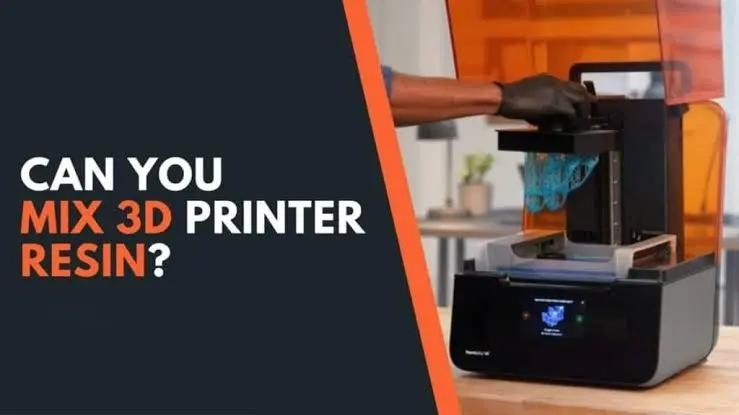
It happens to almost every resin printer owner. You are halfway through a print job when you notice the bottle is nearly empty. You have a half-full bottle of a different brand sitting on the shelf. It looks similar, it is the same color, and it is made for the same kind of printer. So why not just pour it in?
Or maybe you want a custom color, a tougher material, or you simply want to use up leftovers instead of wasting them.
The question is a fair one: can you mix different brands of 3D printer resin?
The honest answer is: sometimes, but it is risky, and it is usually not the best idea. In this guide, you will learn why mixing resins can cause problems, when it might be acceptable, how to test a mix safely, and what to do instead. Everything is explained in simple, practical language.
The Short Answer
- Mixing the same brand and same type of resin (for example, two bottles of the same resin, or two colors from the same range) is usually fine, as long as you mix well.
- Mixing different brands of resin can work in some cases, but results are unpredictable. It is risky for important prints.
- Mixing castable resin or dental resin with anything else is not recommended, because those resins are made for specific workflows and standards.
If you remember only one thing from this article, remember this: resins are chemical recipes, and every brand has its own recipe. Mixing recipes can change how the resin cures, how strong it is, and how it behaves in your printer.
What Is Inside Resin? A Quick Look
To understand why mixing is risky, it helps to know what resin is made of. A typical photopolymer resin contains:
- Monomers and oligomers: The building blocks that join together to make solid plastic when cured.
- Photo initiators: Chemicals that react to UV light and start the curing process.
- Pigments or dyes: They give the resin its color.
- Additives: Extra ingredients that adjust properties like toughness, flexibility, thickness, or smell.
Each manufacturer chooses its own mix of these ingredients to get a certain result, such as high detail, toughness, or castability. They also test and tune exposure settings for that exact recipe.
When you combine two recipes, you create a new, untested recipe. The settings, strength, and behavior may not match either original resin.
Why Mixing Different Brands Can Cause Problems
Here are the most common problems people run into.
1. Unpredictable Curing
Different resins use different photoinitiators and need different amounts of light to cure. A mix might need more or less exposure than either bottle. The result can be:
- Under-cured, weak, or sticky parts
- Over-cured, brittle parts
- Layers that do not stick together
- Prints that fail midway
2. Different Wavelength Sensitivity
Most LCD resin printers use 405 nm UV light, but not every resin is tuned the same way. A resin that cures well for one brand may be slower or faster in a mix, which makes your exposure settings unreliable.
3. Changes Strength and Flexibility
One resin might be hard and brittle. Another might be tough and slightly flexible. A mix can land somewhere in between, or it can create a weak material that is worse than both. You will not know until you test, and by then you may have wasted several prints.
4. Different Thickness (Viscosity)
Resins have different thicknesses. A thick resin mixed with a thin one gives you something in between, which can change how well the resin flows, how easily bubbles escape, and how large the peel forces are during printing.
5. Color and Clarity Problems
Mixing colors from different brands can create uneven, muddy, or surprising colors. If you mix a clear resin with a different clear brand, you may end up with a hazy, yellow, or cloudy result. Our guide on whether resin 3D printing can produce transparent parts explains why clarity is so sensitive.
6. Shrinkage and Accuracy Changes
Every resin shrinks slightly as it cures, and different recipes shrink by different amounts. A mix can change shrinkage, which affects accuracy. This matters a lot for parts that need to fit together, such as functional prototypes or dental models.
7. Smell, Skin Irritation, and Safety
Mixing resins can change how they smell and how irritating they are. The safety data sheets for each resin only cover that resin on its own. A mix is a new product, and its safety profile is not documented. Always follow good safety habits. Our guide on resin 3D printing safety explains how to protect yourself.
8. Warranty and Support Issues
If you mix resins and something goes wrong, such as a clogged vat, a damaged film, or a failed screen, the printer or resin manufacturer may refuse support. It is also much harder to troubleshoot, because there are so many possible causes.
9. Hidden Reactions Between Ingredients
Some ingredients do not play well together. In rare cases, mixing can cause the resin to thicken, cloud, separate, or cure partially inside the bottle. You may not notice this until a print fails.
When Mixing Might Be Acceptable
Not every mix is a disaster. Here are the situations where mixing is usually less risky.
Same Brand, Same Resin, Different Batches
If you have two bottles of the same resin from the same brand, mixing them is generally fine. Just stir well, because pigments and fillers can settle differently between bottles.
Same Brand, Different Colors of the Same Resin Line
Many brands sell colors in the same family, such as gray, black, and white, which share the same base recipe. Mixing these to create a custom color often works, because the underlying chemistry is the same.
- Check that the brand says the colors are compatible.
- Mix slowly and thoroughly.
- Test the final color with a small print.
- Expect slight exposure differences between colors.
Mixing Hard and Flexible Versions from the Same Brand
Some manufacturers allow you to blend a standard resin with a flexible resin to get a slightly more flexible or tougher material. If the brand recommends it and gives mixing ratios, it can be a valid way to adjust properties. Always follow their guidance.
Using Colorants or Pigments Made for the Resin
Some brands sell pigment pastes designed to add color. If they are made for your resin, they are a safer way to create custom colors than mixing two different resin brands.
Very Similar Resins as a Last Resort
Sometimes users combine two similar resins from different brands, such as two standard water-washable resins, because they have no choice. This can work, but it should only be done for non-critical prints, with careful testing first. Never do this for parts where strength, accuracy, or safety matters.
When You Should Not Mix Resins
There are some cases where you should avoid mixing completely.
- Castable resin for jewelry. These resins are designed to burn out cleanly, leaving little or no ash. Mixing them with another resin can ruin burnout and damage castings. Our guides on the jewelry casting workflow with 3D printing and post-processing castable resin prints explain why the resin must stay consistent.
- Dental resins. These are made for specific dental uses and often follow strict manufacturing and testing rules. Mixing creates an untested material, which is not appropriate for dental models, guides, or appliances. Our article on dental model accuracy explains why consistency matters.
- Engineering resins where strength and impact resistance matter. A mix may lose the properties you are paying for. Our guide on the difference between tough resin and ABS-like resin explains what makes those resins special.
- Resins made for different wavelengths or printer types. Make sure any resin you use matches your printer.
- Any resin where accuracy, safety, or reliability matters.
- Resins with unknown or damaged contents. If a bottle is old, separated, thickened, or has been exposed to light, do not mix it into good resin.
How to Test a Resin Mix Safely
If you decide to mix resins, do it carefully and on a small scale. Never mix in your main bottle or in a full vat.
Step 1: Read the Information
Check both bottles. Look at the resin type, wavelength, and any compatibility notes. If either manufacturer says not to mix, follow their advice.
Step 2: Put on Safety Gear
Wear nitrile gloves and eye protection, and work in a well-ventilated space.
Step 3: Make a Small Test Batch
Mix a small amount in a clean, disposable container, such as a 50 ml cup. Use the same ratio you plan to use later, such as 50:50 or 70:30.
Step 4: Mix Gently but Thoroughly
Stir slowly with a clean plastic or silicone stirrer for a few minutes. Avoid whipping in air bubbles. Let the mix rest so bubbles can rise.
Step 5: Check the Look and Feel
Watch for signs of trouble:
- Cloudiness or separation
- Strange color changes
- Unusual thickening
- Strong or unusual odor
- Grit or clumps
If you see any of these, stop and throw the mix away safely.
Step 6: Run an Exposure Test
Print a calibration model and compare exposure settings. Start with the settings of the less sensitive resin and test upwards. Check detail, layer bonding, and surface quality.
Step 7: Print a Small Test Part
Print something small and simple that you can test physically. Check:
- Is it fully cured, not sticky?
- Is it too brittle or too soft?
- Does it match the expected size?
- Does it warp or crack?
Step 8: Test the Final Properties
If strength, flexibility, or fit matters, test those directly. Bend it, press it, drop it, and fit it to a mating part.
Step 9: Keep Records
Write down the brands, ratio, exposure settings, and results. If the mix works, you can repeat it. If it does not, you will know what to avoid.
If failures keep happening, our guide on why resin 3D prints fail can help you find the cause.
What Not To Do When Mixing
- Do not pour a new resin into your original bottle. Cured particles or chemical changes can ruin the whole bottle.
- Do not mix directly in the vat unless you are sure it will work. If it fails, you may have to throw away the entire vat of resin.
- Do not mix resin that has already been used and filtered with fresh resin without testing first. Used resin can behave differently.
- Do not use a mix for critical parts until it has passed several tests.
- Do not forget to label any container holding a mixed resin with the brands, ratio, and date.
Better Alternatives to Mixing Brands
If your goal is to save money, get a certain color, or change properties, there are safer ways to do it.
Finish the Bottle You Have
If you are running low, print smaller parts to use up the resin, then switch to a new bottle of the same brand and type once the vat is mostly empty.
Switch Resins Cleanly
When changing brands, do it properly:
- Pour the old resin back through a filter into its own bottle.
- Wipe the vat with clean paper towels.
- Clean the vat gently with isopropyl alcohol, using plastic tools only.
- Dry the vat completely.
- Inspect the release film for damage. Our guides on NFEP film and how to remove cured resin from an FEP film explain how to look after it.
- Fill the vat with the new resin and run a quick exposure test.
Use Separate Vats
If you often switch between resins, keep a separate vat for each type. This avoids cross-contamination and saves a lot of cleaning time.
Use Compatible Pigments
If you want custom colors, buy pigments made for your resin. This is much safer than mixing two different resin brands.
Choose the Right Resin from the Start
If your resin does not give the properties you need, look for a resin designed for that purpose instead of trying to create one. For example, choose a tough resin for toughness or a clear resin for transparent parts.
Buy in Sensible Quamtities
Buying the right amount avoids both running out mid-print and having small leftovers that tempt you to mix.
What to Do With Leftover Resin
Leftover resin should not be wasted, but it also should not be mixed carelessly.
- Keep it in its original bottle, labeled and sealed.
- Filter used resin before returning it to a separate, labeled bottle.
- Store it away from light and at a stable temperature.
- Use it for non-critical prints like test pieces, calibration models, or stands.
- Dispose of unusable resin safely. Cure it fully under UV or sunlight in a disposable container, then dispose of the solid according to your local rules. Never pour liquid resin down the drain.
Common Mistakes to Avoid
- Assuming all resins with the same color are the same
- Mixing castable or dental resins with others
- Pouring different resins into a full vat
- Skipping the exposure test
- Not cleaning the vat when switching resins
- Using the same settings for every resin
- Not recording what you mixed
- Using a mix for critical parts without testing
- Skipping safety gear
Quick Decision Checklist
Mixing is usually fine when:
- It is the same brand and same resin type
- Colors are from the same compatible line
- The brand recommends the mix and gives a ratio
- You mix well and test first
Think twice when:
- You are mixing different brands
- The resins are different types, such as standard and flexible
- You are not sure about wavelength or compatibility
Do not mix when:
- You are using castable or dental resins
- The part needs reliable strength or accuracy
- Safety or regulations matter
- A resin looks old, thick, or separated
Always:
- Test a small batch first
- Wear gloves and eye protection
- Label everything
- Keep records
FAQ
Is it safe to mix different brands of resin?
It is not recommended for important prints. Different brands use different recipes, so mixing creates an untested material with unpredictable curing, strength, and safety. For casual prints, a careful small test is the only safe way to try.
Can I mix resins of different colors?
If the colors are from the same brand and the same resin line, usually yes. Mixing colors from different brands is riskier.
Will mixed resin damage my printer?
Not necessarily, but a bad mix can cause failed prints, stuck layers, and cured resin on the film, which can damage the film or even the screen if it leaks. Test small first and watch the first prints closely.
Can I mix old and new resin of the same brand?
Usually yes, if the old resin has been stored properly and filtered. Mix well and run an exposure test first.
Can I mix standard resin with flexible resin?
Some brands allow this to adjust flexibility, but only follow ratios recommended by the manufacturer. Always test the mix before using it for real parts.
Can I mix castable resin regular resin?
No. Castable resin is designed to burn out cleanly, and adding other resin can ruin burnout and casting quality.
Can I mix dental resin with another brand?
No. Dental resins are made for specific uses and often follow strict standards. Mixing creates an untested material that is not suitable for dental work.
How do I clean the vat when switching resin brands?
Filter the old resin back into its bottle, wipe the vat, clean gently with IPA using plastic tools, dry fully, and check the release film before adding the new resin.
How do I dispose of a failed resin mix?
Cure the leftover liquid fully under UV or sunlight in a disposable container, then dispose of the solid according to local rules. Do not pour liquid resin down the drain.
Conclusion
So, can you mix different brands of 3D printer resin? Sometimes yes, but it is a gamble, and it is rarely worth it.
Resins are carefully balanced recipes. Mixing two different recipes creates a new one with unknown curing, strength, safety, and accuracy. If you must mix, stick to the same brand and type, test a small batch first, wear proper protection, and keep records. Never mix castable or dental resins. For everyday work, the safest and cheapest approach is to use one resin at a time, clean the vat properly when switching, and choose the right resin for each job.
If you are looking for reliable resins and a printer that suits your work, explore our range of resin 3D printers, resins, and accessories at MCast 3D. If you are not sure which resin is best for your project, contact our team and we will help you choose.