
Resin Printing vs FDM Printing – Which is Better for Jewelry?

3D printing has become an important part of modern jewelry design and manufacturing. Designers can create digital models, test new ideas, produce prototypes, and prepare patterns for casting without relying entirely on traditional methods.
However, not all 3D printing technologies are equally suited to jewelry.
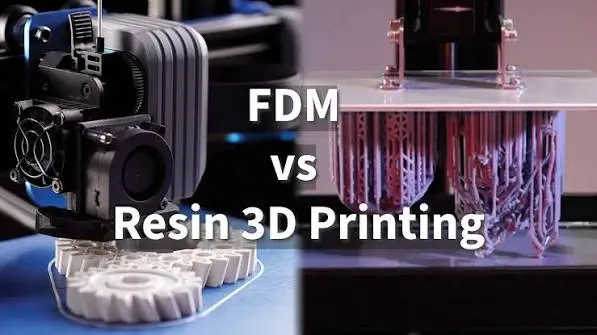
Two of the most common technologies are resin 3D printing and FDM 3D printing. Both can create physical models from digital designs, but they work in very different ways.
For jewelry applications, the differences in detail, surface finish, layer visibility, material requirements, and post-processing can have a significant impact on the workflow.
This guide compares resin and FDM printing for jewelry and explains where each technology fits into the production process.
What Is Resin 3D Printing?
Resin 3D printing uses liquid photopolymer resin that is cured using controlled UV light.
The printer builds the model layer by layer. Because the printing system can control very small areas of the exposed resin, it can reproduce fine details and intricate shapes.
This makes resin printing particularly useful for applications where surface quality and small features matter.
In jewelry, resin printers can be used for:
- Jewelry prototypes
- Detailed design models
- Casting patterns
- Rings
- Pendants
- Earrings
- Intricate decorative pieces
- Custom jewelry designs
For casting workflows, a suitable castable resin can be used to create a pattern that is later incorporated into the investment casting process.
What Is FDM 3D Printing?
FDM, or Fused Deposition Modeling, works differently.
Instead of liquid resin, an FDM printer melts thermoplastic filament and deposits it through a heated nozzle.
The material is laid down one layer at a time until the complete object is produced.
FDM printing is widely used for:
- Large prototypes
- Functional parts
- Fixtures
- Product development
- Educational models
- General-purpose 3D printing
FDM can be very useful for many manufacturing applications, but jewelry places different demands on a printer.
Small jewelry designs often contain fine edges, engravings, thin sections, and detailed textures that require high levels of resolution.
Resin vs FDM for Jewelry: The Main Difference
The biggest difference is detail reproduction.
Resin printers generally have an advantage when producing small and intricate models because the printing process can reproduce much finer features.
FDM printers work well for larger objects, but the deposited filament creates visible layer lines and limits the level of small detail that can be reproduced.
For a jewelry designer, these differences become noticeable when working with:
- Fine engravings
- Filigree
- Small lettering
- Thin walls
- Sharp edges
- Textured surfaces
- Detailed stone settings
- Intricate patterns
This is one of the main reasons resin 3D printing is widely used for jewelry-related workflows.
Surface Finish and Detail
Surface quality is important when creating jewelry patterns.
A printed pattern may eventually be cast into metal, so the quality of the printed surface can affect the amount of finishing required later.
Resin Printing
Resin printing can produce smooth surfaces and fine details with relatively low layer visibility.
High-resolution resin printers are particularly useful when the design contains small features.
For example, the Nova3D GEM3 Jewelry uses a 17 × 17 μm pixel size and a 154 × 87 × 120 mm build volume, making it suitable for detailed resin printing applications.
The Nova3D GEM3 Max Jewelry provides a larger 211 × 118 × 120 mm build volume with a 14 × 19 μm pixel size. Its larger working area can be useful when producing multiple jewelry models in one print.
FDM Printing
FDM printers can produce good-quality prototypes, but their layer lines are generally more visible.
Fine jewelry surfaces may require additional sanding, filling, or other finishing before the model is suitable for further production.
This additional finishing can be inconvenient when working with small and intricate jewelry designs.
Which Technology Is Better for Jewelry Casting?
For jewelry casting, resin printing is generally more suitable because it can produce detailed patterns with a smoother surface.
The choice of material is also important.
A standard modeling resin is not automatically suitable for investment casting. Jewelry casting requires a material designed to work with the investment and burnout process.
Castable Resin
Castable resin is formulated specifically for workflows where the printed pattern will be removed during burnout.
The printed model is incorporated into the investment process, and the material must be capable of leaving the required cavity without creating problems during burnout.
MCast 3D offers MCast Jewellery Castable Resin in formulations intended for jewelry casting workflows, including Retroflow Yellow Green and Onyx Black castable resin.
The specific resin, printing parameters, cleaning process, curing procedure, investment material, and burnout cycle should always be matched according to the manufacturer’s recommendations.
Why Fine Detail Matters in Jewelry
Jewelry designs often contain features that are much smaller than those found in general-purpose 3D printing.
A ring may contain a small engraving or a thin decorative pattern.
A pendant may contain detailed textures or delicate geometry.
These features need to be reproduced accurately if the final physical piece is expected to match the digital design.
Resin Printing for Intricate Designs
Resin printers can reproduce:
- Fine engravings
- Small lettering
- Filigree
- Textures
- Thin decorative elements
- Sharp edges
- Detailed geometric patterns
This makes them particularly useful for jewelry designers and manufacturers who work with detailed CAD models.
Resin Printing vs FDM: Accuracy
Accuracy depends on more than the printer’s advertised resolution.
The digital model, printer calibration, material, exposure settings, orientation, supports, environmental conditions, and post-processing can all affect the final result.
However, resin printing provides a strong foundation for precision-focused jewelry workflows.
Factors That Affect Resin Printing Accuracy
Important factors include:
- Pixel size
- Layer height
- Exposure settings
- Resin properties
- Model orientation
- Support placement
- Printer calibration
- Washing
- Post-curing
A high-resolution printer does not automatically guarantee a perfect jewelry model.
The complete workflow must be controlled.
Factors That Affect FDM Accuracy
FDM accuracy can be affected by:
- Nozzle diameter
- Layer height
- Extrusion settings
- Filament properties
- Print temperature
- Bed temperature
- Cooling
- Material shrinkage
- Print speed
These factors can make highly detailed jewelry designs more challenging to reproduce.
Printing Speed and Production
Speed is another factor to consider.
FDM printers can be efficient when producing larger parts because they can deposit relatively large amounts of material quickly.
However, jewelry models are generally small, so the benefits of FDM’s larger material deposition are less important.
Resin printing can produce multiple small models within one build area.
For example, a larger resin printer such as the Nova3D GEM3 Max Jewelry provides additional space for arranging multiple jewelry designs in a single print.
For jewelry workshops producing several patterns at once, build area can therefore be just as important as individual print speed.
Post-Processing Requirements
Neither resin nor FDM printing ends when the printer finishes the model.
Both technologies require some level of post-processing.
Resin Post-Processing
Resin prints generally require:
- Removing the printed model
- Washing
- Drying
- Removing supports
- Post-curing
- Final inspection
Castable resin patterns may then move into the investment casting workflow.
The exact process depends on the material being used.
FDM Post-Processing
FDM parts may require:
- Support removal
- Sanding
- Filing
- Surface smoothing
- Priming
- Painting
For jewelry, the amount of manual finishing required can become significant when the printed surface contains visible layer lines.
Material Considerations for Jewelry
Material selection is one of the biggest differences between general-purpose 3D printing and jewelry production.
A jewelry designer should not select a material only because it produces a good-looking print.
The material needs to match the intended purpose.
Resin for Jewelry Models
Standard resin can be suitable for prototypes and visual models, depending on the intended application.
However, if the printed pattern will be used for investment casting, a suitable castable resin should be selected.
FDM Filament
FDM printers can use materials such as PLA, PETG, ABS, and other thermoplastics.
These materials can be useful for prototypes and larger models.
They are not automatically suitable for direct jewelry casting workflows.
Which Is Better for Jewelry Prototyping?
The answer depends on the type of prototype.
For a large display model or basic concept model, FDM can be perfectly practical.
For a small jewelry design where surface quality and fine details matter, resin printing is generally more appropriate.
A resin printer can provide a closer representation of the final jewelry geometry and surface.
This can make it easier to identify design problems before moving to production.
Which Is Better for Jewelry Casting?
For investment casting patterns, resin printing is the more relevant technology.
A suitable castable resin can be designed specifically for the burnout and investment process.
This allows the digital jewelry workflow to connect directly with traditional casting.
The basic process can look like this:
CAD Design → Slicing → Resin Printing → Cleaning → Post-Processing → Inspection → Spruing → Investment → Burnout → Metal Casting → Finishing
FDM can still have a role in jewelry businesses, but it is generally more useful for supporting tools, fixtures, larger prototypes, and non-casting applications.
Choosing a Resin 3D Printer for Jewelry
When selecting a resin printer for jewelry, look beyond the resolution number.
Consider the complete workflow.
Resolution
Fine pixel size can help reproduce small design features.
For jewelry, this can be important for engravings, filigree, textures, and delicate geometry.
Build Volume
A larger build area can allow more models to be printed in one job.
This can be useful for jewelry workshops producing multiple pieces.
Printing Stability
Consistent printing is important when producing repeat patterns.
A printer should maintain reliable movement and exposure throughout the build.
Resin Compatibility
The printer should support the resin required for the intended application.
This is particularly important for castable resin workflows.
Resin Printers Available from MCast 3D
MCast 3D’s current range includes several resin printers that can be relevant to jewelry and detailed resin printing workflows.
The Nova3D GEM3 Jewelry is designed around high-detail resin printing and provides a 154 × 87 × 120 mm build volume.
The Nova3D GEM3 Max Jewelry offers a larger 211 × 118 × 120 mm build volume and 14 × 19 μm pixel size, giving jewelry professionals more room for larger or multiple designs.
Other resin printers in the MCast range can also serve general detailed-printing requirements, but the appropriate machine should always be selected according to the jewelry workflow, required print size, material compatibility, and production volume.
Common Mistakes When Choosing a 3D Printer for Jewelry
Choosing FDM Only Because It Is Familiar
FDM printers are useful machines, but familiarity does not necessarily make them suitable for every jewelry workflow.
If the main requirement is fine detail and smooth surfaces, resin printing deserves serious consideration.
Focusing Only on Resolution
Resolution is important, but it is not the only factor.
A reliable workflow also requires suitable resin, correct exposure, proper supports, accurate orientation, and controlled post-processing.
Using the Wrong Resin for Casting
A resin that produces a good-looking model may not be suitable for investment casting.
Always confirm that the material is intended for the required casting workflow.
Ignoring Post-Processing
Cleaning and curing can affect the final dimensions and surface of a resin print.
Post-processing should therefore be treated as part of the production process.
Resin Printing vs FDM for Jewelry: Quick Comparison
| Feature | Resin 3D Printing | FDM 3D Printing |
|---|
| Fine detail | Excellent for small details | More limited |
| Surface finish | Generally smoother | More visible layer lines |
| Small jewelry designs | Well suited | More challenging |
| Intricate patterns | Well suited | Limited by nozzle and layer size |
| Casting patterns | Suitable with castable resin | Generally not the preferred workflow |
| Large prototypes | Possible, depending on printer | Often practical |
| Post-processing | Washing and curing | Support removal and finishing |
| Material format | Liquid resin | Thermoplastic filament |
| Jewelry-focused workflow | Strong fit | Better for supporting applications |
Which Is Better for Jewelry?
There is no single 3D printing technology that is best for every situation.
FDM has an important place in prototyping, fixtures, tools, and larger models.
However, when the priority is fine jewelry detail, smooth surfaces, intricate designs, and casting patterns, resin 3D printing is generally the more suitable technology.
The important thing is to select the technology according to the final application rather than choosing a printer based only on price or headline specifications.
For jewelry professionals working with digital designs and investment casting, a high-resolution resin printer paired with an appropriate castable resin can provide a practical bridge between CAD design and physical production.
Conclusion
Resin and FDM 3D printing both have useful applications, but jewelry places particular demands on a printing system.
Fine details, smooth surfaces, small dimensions, and casting requirements make resin 3D printing especially relevant to jewelry production.
FDM remains useful for larger prototypes, fixtures, tools, and other supporting tasks, but it is less suited to highly detailed jewelry patterns.
For professionals producing jewelry through digital workflows, the combination of a high-resolution resin 3D printer and a suitable castable resin can make the transition from CAD design to physical jewelry production much more efficient.
The final result still depends on the complete workflow, including design, printer settings, resin selection, post-processing, investment, casting, and finishing.