Castable Resin for Jewelry 3D Printing: A Complete Guide

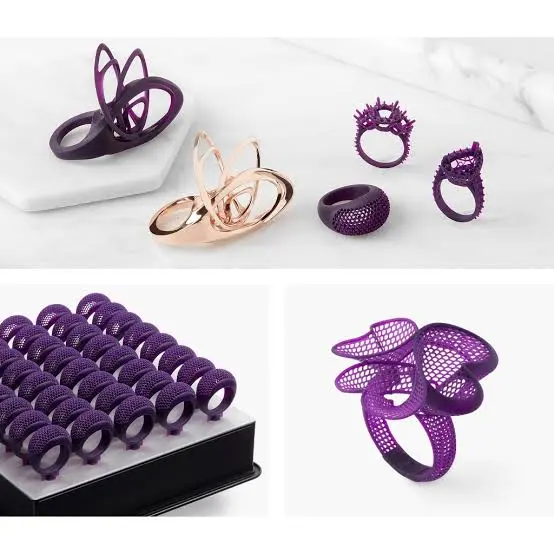
Castable resin has transformed how jewelers create detailed patterns for investment casting.
Instead of manually producing every wax pattern, designers can create detailed models using CAD software. A resin 3D printer can then produce the casting pattern with high levels of detail.
This workflow is especially useful for rings, pendants, filigree designs, and other intricate jewelry pieces.
Castable resin is also used in specific dental casting workflows. However, the material must match the intended application and manufacturer’s specifications.
For jewelry professionals, the combination of 3D printing, castable resin, and investment casting creates a practical digital manufacturing workflow.
What Is Castable Resin?
Castable resin is a specialized resin 3D printing material designed for casting applications.
Unlike standard modeling resins, castable materials are formulated for use in investment casting workflows.
The printed pattern is placed inside investment material before undergoing a controlled burnout process. The pattern is removed, leaving a cavity that can later receive molten metal.
The exact burnout behavior depends on the resin formulation and casting process.
For this reason, users should always follow the resin manufacturer’s recommended burnout and casting procedures.
How Does Castable Resin Work?
The process begins with a digital design created in CAD software.
The finished model is prepared for resin 3D printing and sliced using suitable printing parameters.
The resin printer then builds the pattern layer by layer.
After printing, the pattern requires appropriate cleaning and post-processing.
The finished pattern can then be prepared for investment casting.
During burnout, the pattern is removed from the investment material according to the recommended heating cycle.
The resulting cavity can then be used for metal casting.
From Digital Design to Metal Casting
A typical workflow includes:
- Create the jewelry design in CAD software.
- Prepare the model for 3D printing.
- Slice the model using the correct resin profile.
- Print the pattern using a compatible resin printer.
- Clean and inspect the printed pattern.
- Attach the required sprues.
- Invest the pattern using suitable investment material.
- Follow the recommended burnout cycle.
- Cast the selected metal.
- Finish and inspect the final jewelry piece.
Each stage can affect the final casting result.
Castable Resin for Jewelry Making
Jewelry is one of the most important applications for castable resin.
Traditional wax carving can require considerable time for complex designs. Digital modeling makes it easier to create, modify, and reproduce intricate shapes.
A resin 3D printer can then turn those digital designs into physical casting patterns.
Creating Intricate Jewelry Designs
Castable resin can support highly detailed jewelry patterns.
Designers can create:
- Fine filigree
- Detailed textures
- Engraved patterns
- Custom rings
- Pendants
- Decorative elements
- Complex geometric designs
The final level of detail depends on the printer, resin, model geometry, and printing parameters.
Custom Jewelry Production
Digital workflows are particularly useful for customized jewelry.
A customer’s design can be created digitally and adjusted before printing.
Once the design is approved, a physical casting pattern can be produced using a suitable castable resin.
This makes digital jewelry production more flexible and repeatable.
Why Choose Castable Resin for Jewelry?
Castable resin offers several advantages when it is correctly matched with the casting process.
High Detail and Precision
Modern resin 3D printers can reproduce small features and intricate geometries.
This allows jewelry designers to work with designs that can be difficult to produce manually.
However, printer resolution alone does not guarantee accurate casting.
Resin settings, model preparation, supports, cleaning, investment, and burnout also matter.
Clean Burnout
Clean burnout is one of the most important characteristics of casting resin.
The pattern needs to be removed effectively before molten metal enters the investment cavity.
Different castable resins have different burnout requirements.
Always use the manufacturer’s recommended burnout cycle instead of applying one schedule to every resin.
Faster Design Iteration
Digital jewelry design allows changes to be made before producing the physical pattern.
This can reduce the time required to test different design variations.
Designers can adjust dimensions, textures, proportions, and other features in CAD software.
Choosing the Right JAMG HE Casting Resin
When selecting a castable resin, consider:
- Jewelry design complexity
- Required detail
- Printer compatibility
- Recommended exposure settings
- Investment material
- Burnout requirements
- Casting method
- Metal or alloy being cast
- Required production volume
The manufacturer’s technical documentation should always be the starting point for material selection.
Castable Resin for Dental Casting
Castable resin also has applications in dental laboratories.
Dental casting requires materials specifically intended for the relevant dental workflow.
JAMG HE offers Dental Castable Resin as a separate material for dental casting applications.
This distinction is important because jewelry casting resin and dental castable resin should not automatically be treated as interchangeable.
Dental Casting Applications
Dental castable materials can be used for specific casting workflows involving dental patterns and frameworks.
The exact application depends on the resin’s intended use and technical documentation.
Dental laboratories should select materials according to their equipment, workflow, and production requirements.
How to Print With Castable Resin
Successful casting begins with a successful print.
Use the Correct Resin Profile
Exposure settings can affect dimensional accuracy, surface detail, and print success.
Start with the manufacturer’s recommended settings for your specific printer.
Fine-tune the profile through controlled testing when necessary.
Optimize Model Orientation
Model orientation affects supports, surface quality, and printing performance.
Orient the model to reduce unnecessary support marks on visible surfaces.
Complex jewelry designs may require careful support placement around delicate features.
Clean the Printed Pattern
Residual uncured resin can interfere with later processing.
Clean the pattern using the method recommended for the specific resin.
Avoid aggressive cleaning that could damage delicate features.
Inspect Before Investment
Carefully inspect the printed pattern before investing it.
Look for:
- Missing details
- Support damage
- Cracks
- Warping
- Surface defects
- Incomplete cleaning
- Trapped uncured resin
Fixing problems before investment can prevent wasted casting cycles.
Understanding the Burnout Process
Burnout is a critical part of investment casting.
The investment material must remain stable while the printed pattern is removed.
The heating schedule can vary depending on the resin and investment system.
Why Burnout Temperature Matters
A suitable burnout cycle helps remove the pattern from the investment cavity.
An unsuitable cycle can contribute to casting defects or incomplete pattern removal.
For this reason, do not assume that every castable resin requires the same temperature profile.
Follow the manufacturer’s recommended burnout schedule for the selected material.
Common Castable Resin Mistakes
Using the Wrong Resin
Standard resin is not automatically suitable for investment casting.
Use a material specifically designed for the intended casting process.
Overexposing the Resin
Incorrect exposure can affect small features and dimensional accuracy.
Use a calibrated profile instead of increasing exposure without testing.
Poor Cleaning
Remaining uncured resin can affect the casting workflow.
Clean the pattern thoroughly according to the manufacturer’s instructions.
Ignoring Support Placement
Poorly positioned supports can leave marks on visible jewelry surfaces.
Plan support placement carefully during model preparation.
Using an Incorrect Burnout Cycle
Different formulations can behave differently during burnout.
Always follow the recommended heating schedule for the selected material.
Castable Resin and the Future of Jewelry Manufacturing
Digital jewelry production continues to combine traditional casting techniques with modern manufacturing tools.
CAD software makes complex designs easier to develop and modify.
Resin 3D printing then provides a practical way to produce detailed physical patterns.
Investment casting converts those patterns into finished metal components.
This combination gives jewelry manufacturers greater flexibility during design and production.
Castable Resin in Pakistan
For jewelry manufacturers and professional 3D printing users in Pakistan, castable resin provides a practical connection between digital design and traditional investment casting.
MCast 3D offers resin 3D printing materials for different professional applications, including casting and dental workflows.
You can explore the available JAMG HE resin range through MCast 3D.
The right resin should always be selected according to the printer, application, casting method, and manufacturer’s recommendations.
Frequently Asked Questions
What is castable resin used for?
Castable resin is primarily used to produce patterns for investment casting.
It is commonly used in jewelry manufacturing and specific dental casting workflows.
Is castable resin suitable for jewelry?
Yes. Specialized jewelry casting resins are designed for producing patterns used in investment casting.
The specific resin should be compatible with the intended printer and casting process.
What is the difference between castable resin and normal resin?
Castable resin is formulated for a casting workflow.
Standard resin is generally designed for models, prototypes, or other applications.
A standard resin should not be assumed to be suitable for investment casting.
Does castable resin leave ash after burnout?
Burnout performance depends on the specific resin formulation and heating process.
Some manufacturers specifically formulate their casting resins for clean burnout and low residue.
Always follow the manufacturer’s recommended burnout cycle.
Can castable resin be used for dental casting?
Some castable resins are specifically designed for dental casting.
JAMG HE offers a separate Dental Castable Resin for this purpose.
Always verify the intended application before using a material in a professional dental workflow.
What 3D printer is best for castable resin?
The best printer depends on the required detail, build volume, resin compatibility, and production requirements.
A properly calibrated resin 3D printer is essential for producing accurate casting patterns.
Conclusion
Castable resin has become an important material in modern digital casting workflows.
For jewelry manufacturers, it provides a practical way to transform detailed CAD designs into physical casting patterns.
The quality of the final casting depends on more than the resin alone.
Printer calibration, model preparation, supports, cleaning, investment, burnout, and casting conditions all play important roles.
Choosing a castable resin designed for the intended application is therefore essential.
For jewelry and professional casting workflows, JAMG HE offers specialized casting resin options that can support different production requirements.
MCast 3D provides access to JAMG HE materials for professionals looking for resin 3D printing solutions in Pakistan.