
How 3D Printers Are Transforming Industries and Driving Innovation

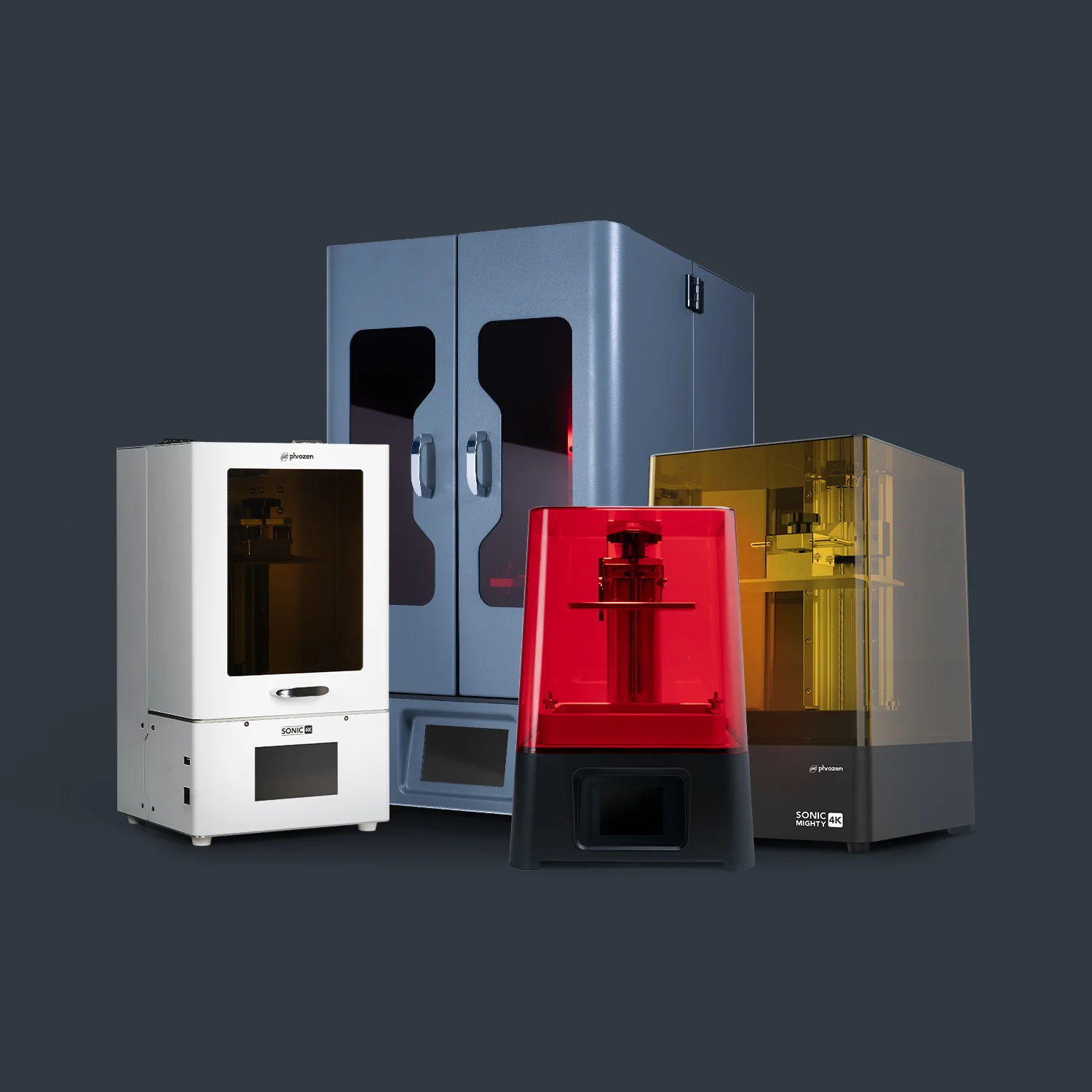
3D printing is changing how products are designed, prototyped, customized, and manufactured.
From jewelry and dentistry to education, engineering, and architecture, 3D printing technology has become an important part of modern production.
A 3D printer can turn a digital design into a physical object by building it layer by layer. This approach gives designers and manufacturers greater flexibility during development and production.
As printing technology continues to improve, more industries are finding practical ways to use 3D printers.
What Is 3D Printing?
3D printing is an additive manufacturing process that creates physical objects from digital designs.
Unlike traditional manufacturing methods that often cut, drill, or mold materials, 3D printing builds an object layer by layer.
The process usually begins with a digital model created in CAD software. The model is then prepared using slicing software.
The slicer converts the design into instructions that the 3D printer can follow.
Depending on the printer, the material can include resin, plastic filament, metal, or other specialized materials.
How Does a 3D Printer Work?
A typical 3D printing workflow includes:
- Create or obtain a digital 3D model.
- Prepare the model in slicing software.
- Select suitable printing settings.
- Load the required printing material.
- Start the printing process.
- Remove the completed print.
- Clean or post-process the part when required.
The exact process depends on the type of 3D printer and material.
Why Is 3D Printing Important?
3D printing offers several advantages over traditional production methods.
It allows designers to test ideas without immediately creating expensive production tooling.
It can also support customized products and small production runs.
For many applications, 3D printing can reduce the time between digital design and physical testing.
Faster Prototyping
Designers can create a physical prototype soon after completing a digital model.
They can then inspect the design, identify problems, and make changes.
This process allows multiple design iterations without rebuilding traditional tooling for every change.
Greater Design Flexibility
Additive manufacturing can produce geometries that may be difficult to manufacture using conventional methods.
This is particularly useful for complex models, customized products, and intricate designs.
Customization
3D printing can produce designs based on individual requirements.
This makes the technology useful for industries where customized products or components are important.
3D Printing in Manufacturing and Prototyping
Manufacturing is one of the largest applications of 3D printing.
Engineers use 3D printers to create prototypes, fixtures, functional models, and production components.
Rapid Product Development
A physical prototype can help engineers evaluate a design before full-scale manufacturing begins.
Design changes can then be tested through additional prototypes.
This shortens the distance between an initial concept and a finished product.
Small-Batch Production
3D printing can also support low-volume production.
Manufacturers can produce limited quantities without investing in traditional molds or tooling.
This can be useful for customized parts, replacement components, and specialized products.
3D Printing in Healthcare and Dentistry
Healthcare is another important area for additive manufacturing.
3D printing can support the production of models, prosthetic components, surgical planning tools, and other specialized products.
Dentistry has also adopted digital 3D printing workflows.
Resin 3D Printing in Dentistry
Resin 3D printers can produce highly detailed dental models and other application-specific products.
A typical digital dental workflow can include scanning, CAD design, slicing, printing, cleaning, and post-curing.
Different dental applications require different materials.
For example, model resin, surgical guide resin, denture base resin, and dental castable resin serve different purposes.
The material should always match the intended application and manufacturer’s specifications.
3D Printing for Jewelry Design
Jewelry manufacturing is another field where resin 3D printing has become highly useful.
Designers can create detailed jewelry models digitally before producing physical patterns.
Castable Resin for Jewelry
Castable resin is designed for workflows involving investment casting.
A jeweler can create a ring, pendant, or other design in CAD software.
A compatible resin 3D printer can then produce the physical pattern.
The pattern can be prepared for investment and burnout before metal casting.
Creating Complex Jewelry Designs
D
Digital design gives jewelers greater control over:
- Fine details
- Surface textures
- Filigree patterns
- Custom shapes
- Engravings
- Geometric designs
The final casting result depends on the complete workflow.
Printer settings, resin selection, cleaning, supports, investment, burnout, and casting conditions all matter.
3D Printing in Art and Creative Design
Artists are also using 3D printing to explore new forms of creative expression.
Digital modeling allows artists to create shapes that can be difficult to produce manually.
Creating Sculptures and Decorative Models
3D printers can produce detailed sculptures, models, decorative objects, and experimental designs.
Artists can also modify digital designs without recreating the entire physical model.
This makes 3D printing useful for both one-off projects and repeated designs.
Combining Digital and Traditional Techniques
3D printing does not have to replace traditional craftsmanship.
Artists can combine printed components with carving, molding, painting, casting, and other techniques.
This creates a hybrid workflow that combines digital precision with hands-on finishing.
3D Printing in Education
Schools, universities, and training centers can use 3D printing to make technical concepts more interactive.
Students can move from theoretical learning to physical experimentation.
Learning Through Physical Models
A 3D printer can create models for subjects such as:
- Engineering
- Biology
- Architecture
- Product design
- Geography
- Mathematics
Physical models can help students understand complex structures and spatial relationships.
Developing Practical Skills
Students can learn about CAD modeling, design iteration, slicing, materials, and manufacturing.
These skills can also introduce students to modern digital manufacturing technologies.
3D Printing in Architecture and Construction
Large-scale additive manufacturing is creating new possibilities in construction.
Specialized systems can deposit materials such as concrete to create building structures.
Large-Scale 3D Printing
Construction 3D printing can automate certain parts of the building process.
Potential benefits include reduced material waste, faster construction for suitable projects, and greater design flexibility.
However, large-scale 3D printing still depends on local regulations, materials, structural requirements, and construction methods.
It is therefore better viewed as an evolving manufacturing technology rather than a universal replacement for conventional construction.
Choosing the Right 3D Printer
The right 3D printer depends on what you plan to produce.
Different printing technologies suit different applications.
Resin 3D Printers
Resin 3D printers are well suited to applications requiring fine details and smooth surfaces.
They are commonly used for:
- Jewelry models
- Dental models
- Miniatures
- Detailed prototypes
- Casting patterns
- Small precision components
FDM 3D Printers
FDM printers use thermoplastic filament to create parts layer by layer.
They are commonly used for larger prototypes, functional models, educational projects, and general-purpose printing.
What Should You Consider?
Before choosing a printer, consider:
- Required print resolution
- Build volume
- Printing speed
- Material compatibility
- Intended application
- Post-processing requirements
- Available software
- Production volume
A printer should be selected according to the application rather than specifications alone.
The Future of 3D Printing
3D printing continues to develop across manufacturing, healthcare, aerospace, education, and creative industries.
Advances in materials, automation, software, and printing technologies are expanding its potential applications.
Smarter Digital Manufacturing
Modern 3D printing is increasingly connected with digital design and automated production.
Designers can move from CAD models to physical parts through increasingly streamlined workflows.
New Materials and Applications
Researchers and manufacturers continue to develop new printing materials.
These developments may expand the use of additive manufacturing in areas that currently rely on conventional production methods.
The future of 3D printing will likely involve a combination of additive manufacturing and traditional manufacturing rather than one completely replacing the other.
3D Printing in Pakistan
3D printing is becoming increasingly useful for businesses, designers, engineers, dental laboratories, and jewelry professionals in Pakistan.
Local access to resin 3D printers and specialized materials can make digital production more practical for professional users.
MCast 3D provides 3D printers, resin materials, and related equipment for different professional applications.
The available range includes solutions for jewelry, dentistry, prototyping, and general resin 3D printing.
Frequently Asked Questions
What is a 3D printer used for?
A 3D printer can create prototypes, models, customized products, casting patterns, educational models, and various functional components.
The suitable application depends on the printer technology and material.
What is the difference between resin and FDM 3D printers?
Resin printers use liquid photopolymer resin and UV light to create parts.
FDM printers use thermoplastic filament and deposit it layer by layer.
Resin printers are often preferred for fine details and smooth surfaces.
FDM printers can be useful for larger and more general-purpose parts.
Is 3D printing useful for jewelry making?
Yes. Resin 3D printing can help jewelers create detailed models and casting patterns.
Castable resin can also support investment casting workflows.
Can 3D printers be used in dentistry?
Yes. Dental professionals and laboratories use specialized 3D printing workflows for various applications.
The correct printer and resin depend on the intended dental application.
Is 3D printing expensive?
The overall cost depends on the printer, materials, production volume, and application.
Professional systems can require a larger initial investment than entry-level printers.
However, 3D printing can provide value through faster prototyping and customized production.
Conclusion
3D printing has moved beyond experimentation and become a practical manufacturing technology.
It supports industries ranging from engineering and manufacturing to dentistry, jewelry, education, and creative design.
The biggest advantage is its ability to connect digital design with physical production.
As printers, materials, and software continue to improve, 3D printing will create even more opportunities for customization, prototyping, and digital manufacturing.
For businesses and professionals, choosing the right 3D printer and material is the first step toward building an efficient 3D printing workflow.